
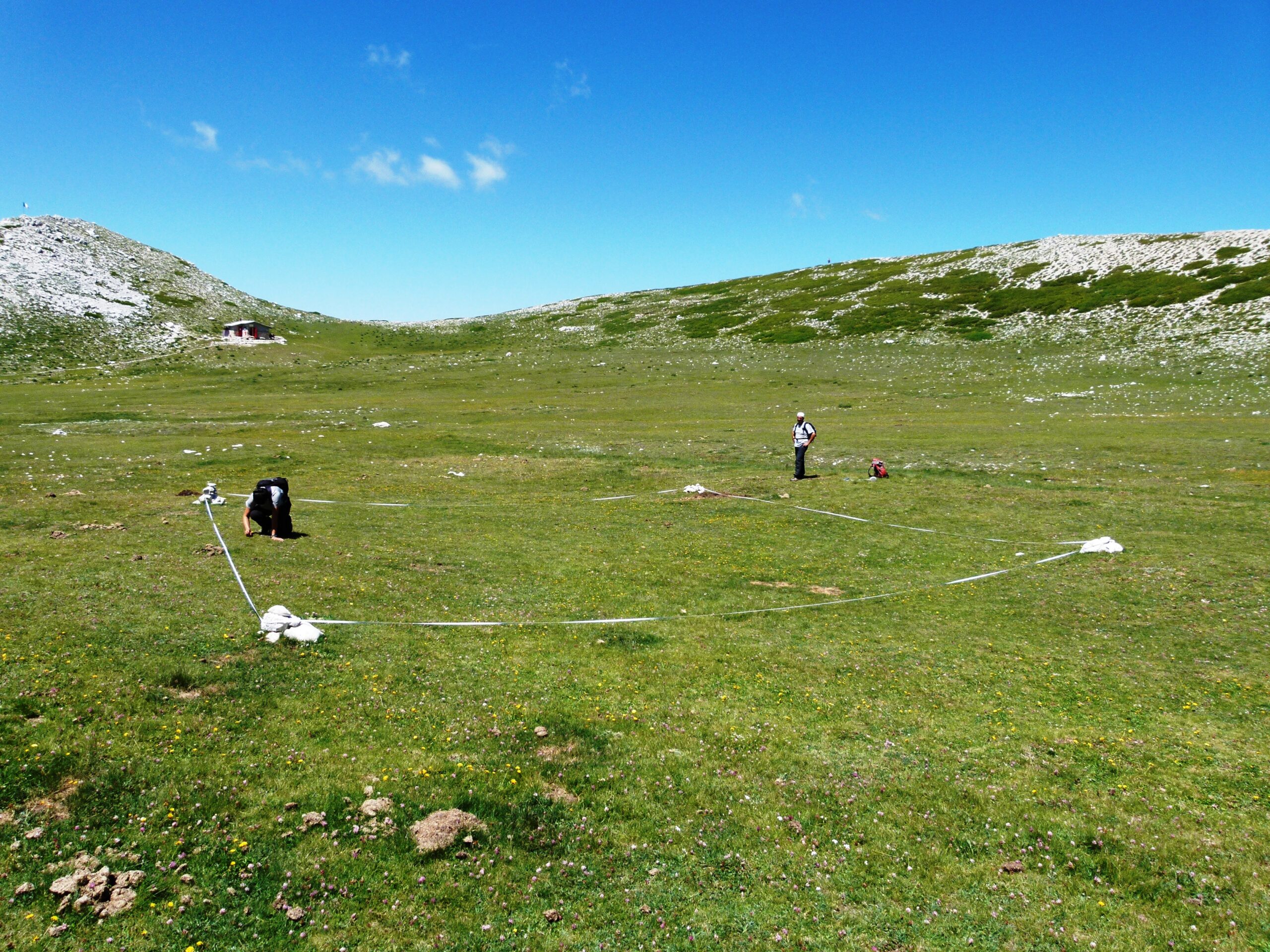
Ecological research on alpine plant communities (snow-bed grasslandnd alpine tundra) has been continuously conducted over the last 33 years at the Velino–Duchessa Long-Term Ecosystem Research (LTER) site in the Central Apennines. Following the Long-Term Ecosystem Research network’s distinctive integrated and ecological approach, researchers analyze biotic components at fine scale using phytosociological relevés.
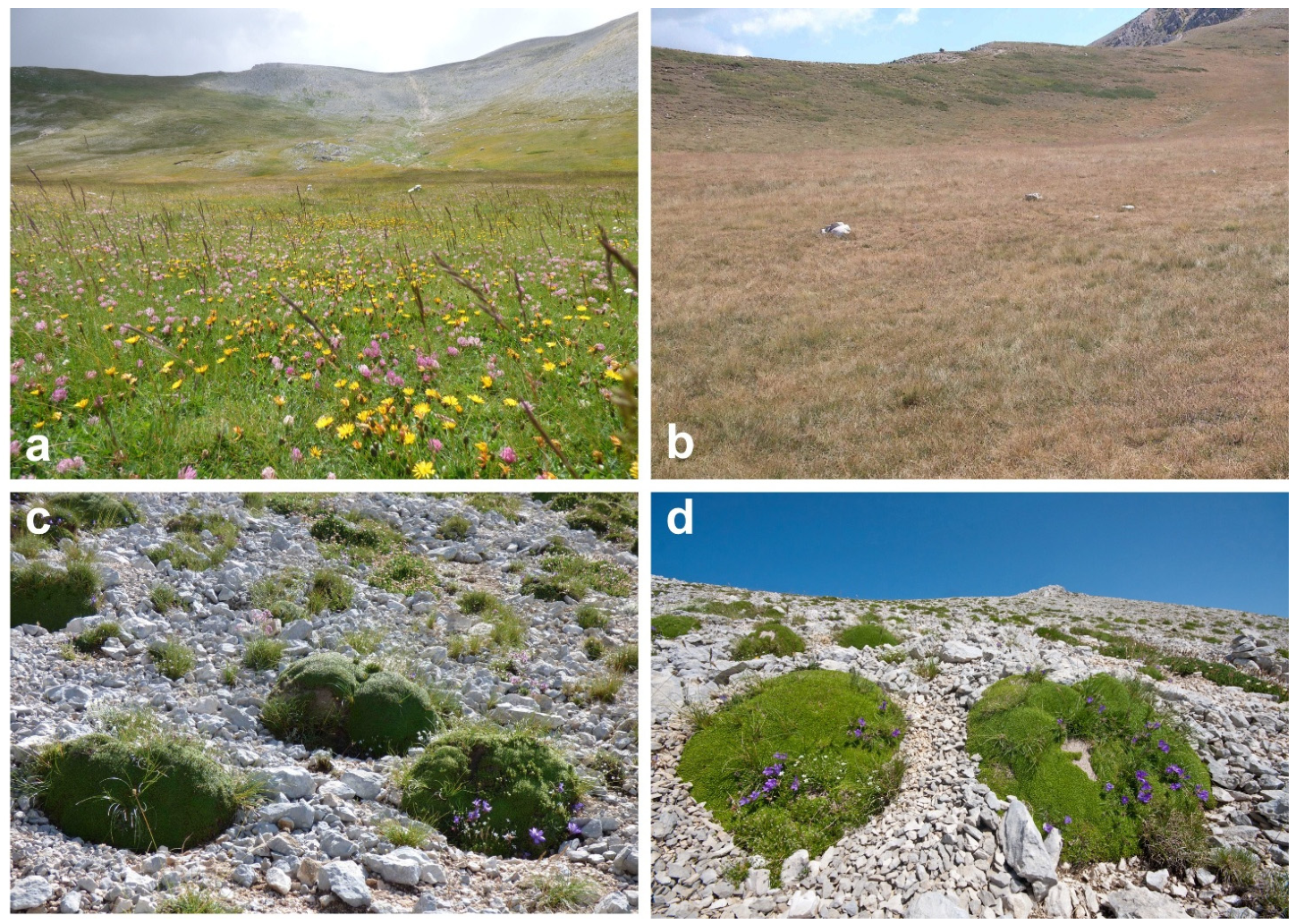
Monitored abiotic parameters include air and soil temperatures, rainfall, snowfall, snow cover persistence, and soil chemistry. Separately for both plant communities, we tested changes in taxonomic diversity (species richness and Shannon diversity) and functional composition (proportion of life form, morpho-functional types, Grime’s strategies, root types, and root depth) using descriptive statistics and generalized additive mixed models. Ecological changes due to increasing water and snow cover deficiencies arise in both plant communities, with 30% change in species composition per year. By contrast, there was no significative change in the total number of plant species, some sensitive species completely disappeared, and a number of invader species appeared, with a rise in more thermophilic and drought-tolerant species and a decline in more mesic and cryophilic species. Climate change in the Apennines, with a strong reduction in the duration of snow cover and an increase in the mean and minimum annual temperatures in the mountains, could be linked to these ecological changes.